 Vela
Vela 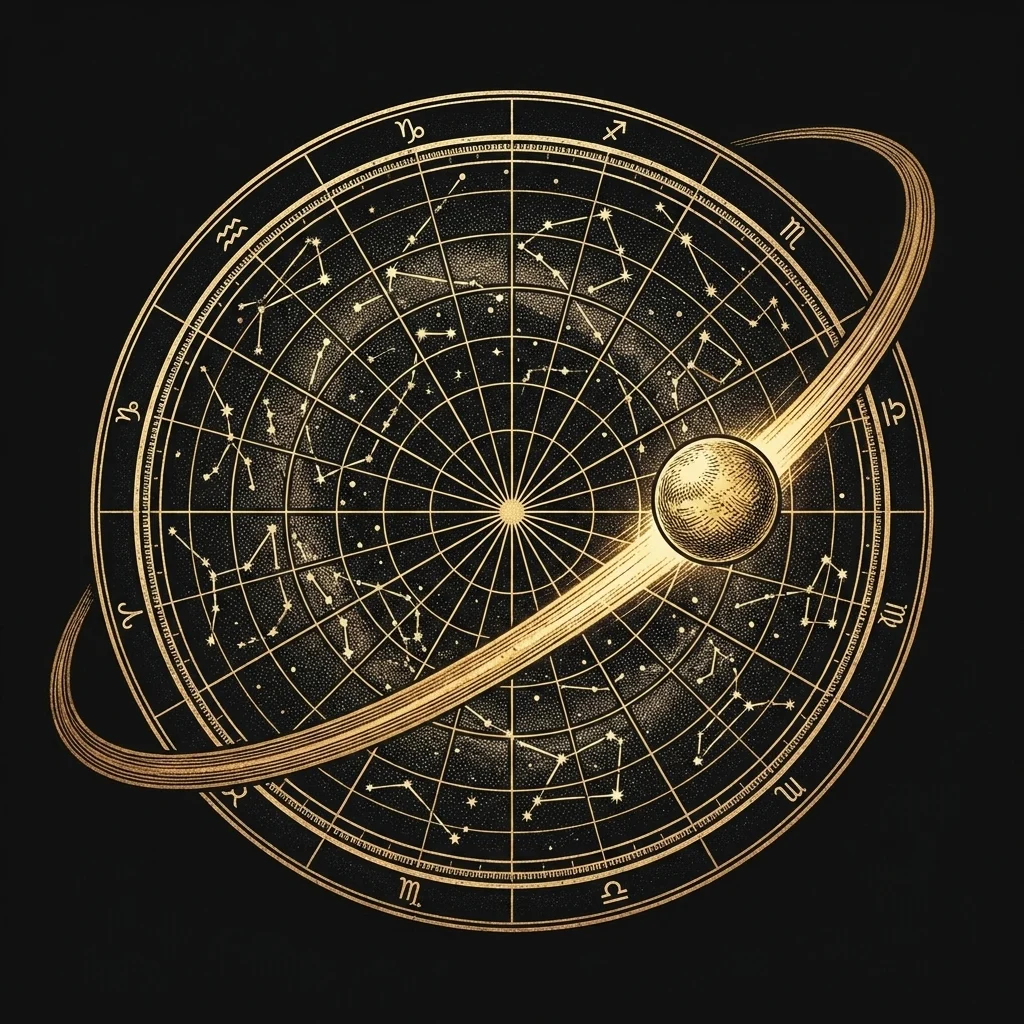
If you have ever wondered how a horoscope claims to know what is going on for you right now, the answer is transits. Here is what they are, in plain language, and how Vela reads them without pretending to tell your future.
Two skies, held together
Your birth chart is a single photograph: the exact arrangement of the sky at the moment and place you were born. It never changes. But the real sky keeps turning, and the planets go on moving through their orbits for the whole of your life. A transit is what you get when you lay the moving sky of today over that fixed birth photograph and look at where they meet.
How astrologers read a transit
The reading happens at the meeting points. When a planet in today's sky reaches a meaningful angle to one of your birth placements, a conjunction where they sit together, or an opposition, square, or trine at set distances around the wheel, astrologers treat that contact as a transit worth noting. The moving planet suggests the theme, the birth placement it touches suggests the part of you it lands on, and the angle suggests the tone, easy or friction, flowing or demanding.
Fast weather and slow seasons
Not all transits carry the same weight, because the planets move at wildly different speeds. The Moon crosses your whole chart in about a month, so its transits are the quick changes of mood, gone in a day. The outer planets crawl, so a single Saturn or Pluto transit can colour a year or more: these are the long seasons of a life, like the Saturn return. The Mercury retrograde everyone mentions is a transit too, a recurring three-week rhythm rather than a rare event.
What Vela does with them
Every Vela daily horoscope is built from real transits: the actual sky of your day, read against the sign or the chart in question by a classical engine, never invented. But we stop where honesty asks us to. A transit, in Vela's hands, names a season and hands the meaning back to you. It can mark a stretch where a theme is worth your attention, and it cannot decide what you do with it. When a transit points at a part of your life, the useful question is never what is coming, it is "what here is asking for my attention right now"?
Frequently asked
What is a transit in astrology?
A transit is where a planet is in the sky right now, read against the frozen snapshot of your birth chart. When a planet in today’s sky lines up at a meaningful angle to a placement you were born with, astrologers call it a transit, and treat it as a symbolic timing cue.
What is the difference between my birth chart and a transit?
Your birth chart never moves: it is the sky frozen at the moment you were born, and it stays yours for life. Transits are the live sky continuing to turn above that fixed map. Reading a transit means holding the two together, the moving planet and the birth placement it is touching.
Do transits predict the future?
Not in Vela’s hands. A transit marks a season with a certain symbolic flavour and leaves the meaning to you. It is a lens for reflection and timing, an invitation to notice a theme, never a forecast of events you cannot change.
Read today's daily horoscopes, learn how to read a birth chart, or explore two long transits everyone has heard of: the Saturn return and Mercury retrograde.